





Air Traffic Controller Guide: An Overview (12/17/2025)
Today’s date is 12/17/2025. This guide details the path to becoming an air traffic controller, covering requirements, training, responsibilities, and compensation details.
What is Air Traffic Control?
Air Traffic Control (ATC) is a vital service dedicated to ensuring the safe, orderly, and efficient flow of air traffic globally. Controllers are the unseen guardians of the skies, preventing collisions and maximizing airspace capacity. They manage aircraft movements from takeoff to landing, coordinating with pilots to maintain safe separation.
This complex system handles nearly a billion passengers annually, demanding precision and quick decision-making. ATC isn’t just about preventing crashes; it’s about optimizing flight paths, managing congestion, and responding effectively to emergencies. Controllers utilize radar, communication systems, and established protocols to achieve these goals, acting as a critical link in the aviation ecosystem.
The Importance of Air Traffic Controllers
Air Traffic Controllers (ATCs) are fundamentally crucial to the safety of the National Airspace System, safeguarding nearly a billion people each year. They prevent the potential for catastrophic incidents by maintaining separation between aircraft, acting as a vital safety net.
Beyond safety, ATCs optimize airspace usage, reducing delays and fuel consumption. Their expertise is especially critical during emergencies, providing immediate guidance and support to pilots. Even during government shutdowns, controllers continued working, albeit without pay, highlighting their dedication. Their role is unseen, yet profoundly impactful, ensuring the smooth and secure operation of air travel.

Becoming an Air Traffic Controller
The path to becoming an ATC involves meeting strict eligibility criteria, passing the AT-SA exam, completing FAA Academy training, and ongoing certification processes.
Eligibility Requirements
Aspiring air traffic controllers must meet specific prerequisites to even begin the rigorous selection process. These requirements encompass both age and educational qualifications, ensuring candidates possess a foundational level of maturity and cognitive ability. Generally, applicants need to be under 31 years of age at the time of appointment to the FAA Academy.
Educational standards typically require completion of a bachelor’s degree, or equivalent experience, such as three years of progressively responsible work experience, or a combination of both. Furthermore, all candidates are subject to stringent medical evaluations to confirm they can handle the demands of the profession.
Age and Education
The FAA mandates a specific age limit for prospective air traffic controllers; applicants generally must be under 31 years old at the time of appointment to the FAA Academy. This age restriction ensures a sufficient career length within the demanding profession.
Regarding education, a bachelor’s degree is typically required, though alternative pathways exist. Three years of progressively responsible work experience can substitute for a degree, or a combination of education and experience may be accepted. This demonstrates a candidate’s ability to learn and adapt quickly, crucial skills for success in air traffic control.
Medical Requirements
Rigorous medical evaluations are essential for air traffic controller candidates. The FAA requires applicants to pass a comprehensive medical examination, ensuring they meet stringent physical and mental health standards. This assessment verifies the ability to handle the high-stress environment and maintain peak performance.
Specific areas of evaluation include vision, hearing, neurological function, and psychological stability. Controllers must demonstrate excellent cognitive abilities, quick reaction times, and the capacity to manage complex situations effectively. Any pre-existing conditions that could impair performance may disqualify a candidate.
The Air Traffic Skills Assessment (AT-SA)
The AT-SA is a crucial hurdle in the selection process, designed to evaluate a candidate’s aptitude for air traffic control. This computer-based exam assesses abilities vital for the role, including spatial reasoning, multitasking, and problem-solving under pressure. It simulates real-world scenarios controllers face daily.
The assessment tests a candidate’s capacity to quickly process information, make accurate decisions, and maintain situational awareness. Successful performance on the AT-SA is mandatory to proceed in the application process, demonstrating the foundational skills needed for FAA Academy training and a career as an air traffic controller.
FAA Academy Training
The FAA Academy in Oklahoma City provides intensive training for aspiring controllers. This rigorous program immerses candidates in simulated air traffic environments, building foundational skills and knowledge. Training covers regulations, procedures, and the use of radar and communication systems.
Approximately 40% of trainees do not complete the program, highlighting its demanding nature. The cost to train a single candidate is around $100,000. Successful completion is essential for certification and placement at an air traffic control facility, marking a significant step towards a rewarding career.
Initial Training Curriculum
The initial curriculum at the FAA Academy focuses on foundational knowledge crucial for safe and efficient air traffic management. This includes detailed study of air traffic rules, regulations, and procedures. Trainees learn about airspace structures, weather impacts, and aircraft performance characteristics.
Simulations play a key role, allowing students to practice handling various traffic scenarios. Emphasis is placed on effective communication, quick decision-making, and maintaining situational awareness. Specific training requirements are detailed in FAA Order JO 3120.4S, ensuring a standardized and comprehensive learning experience.
Washout Rate & Training Costs
The FAA Academy’s training is notoriously rigorous, leading to a significant washout rate. Approximately 40% of trainees do not successfully complete the program, highlighting the demanding nature of the curriculum and the high standards required. This intensive process ensures only the most capable candidates proceed.
The cost to train a single air traffic controller candidate is substantial, estimated to be around $100,000. This investment covers instruction, simulations, facilities, and personnel. Despite the expense, the FAA prioritizes thorough training to maintain the highest levels of safety within the national airspace system.

Types of Air Traffic Control
Air traffic control encompasses several specialties: tower, approach/departure, and en route control. Each focuses on different phases of flight, ensuring safe and efficient airspace management.
Tower Control
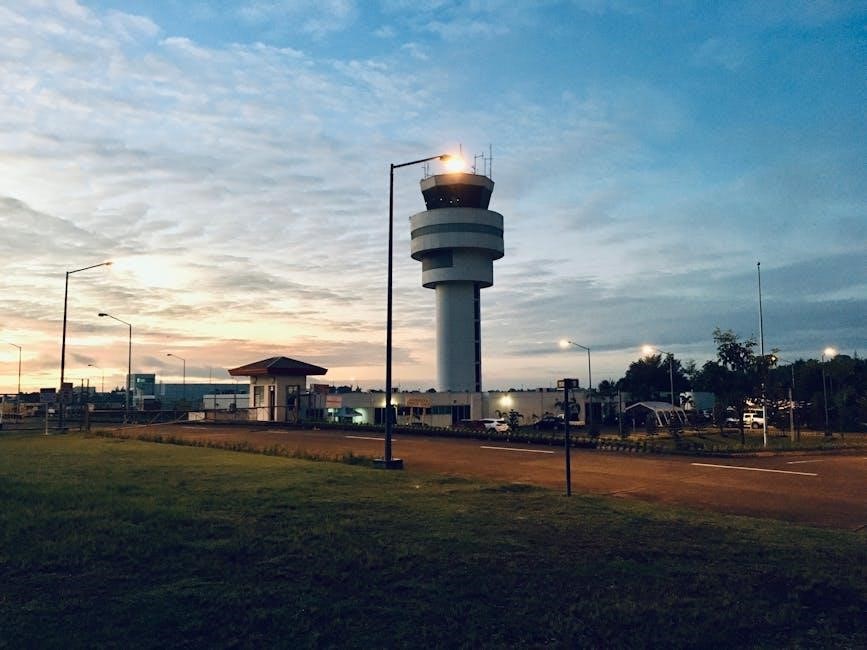
Tower controllers are crucial for the immediate safety of aircraft operating on or near an airport. They direct all aircraft movements on the ground and in the surrounding airspace, typically within a five-mile radius. Responsibilities include authorizing takeoffs and landings, issuing taxi instructions, and ensuring separation between aircraft.
This requires constant vigilance and rapid decision-making, as controllers manage a dynamic environment with changing conditions. They utilize visual observation alongside radar and communication systems to maintain situational awareness. Tower control is often considered the most visually demanding specialty, requiring quick reflexes and precise coordination with pilots. It’s the first point of contact for many pilots.
Approach and Departure Control
Approach and Departure controllers manage aircraft transitioning to and from the airport environment. They handle aircraft within approximately 30 to 50 miles of the airport, guiding them during the critical phases of landing and takeoff. This involves sequencing aircraft for efficient approaches, providing altitude and heading instructions, and ensuring proper separation.
Unlike tower control’s visual focus, approach and departure relies heavily on radar monitoring and radio communication. Controllers coordinate closely with both tower and en route controllers to seamlessly transfer control of aircraft. Maintaining a steady flow of traffic while prioritizing safety is paramount in this role, demanding strong analytical skills.
En Route Control
En Route controllers oversee aircraft flying between airports, at higher altitudes and across vast geographical areas. They work at Air Route Traffic Control Centers (ARTCCs), utilizing radar and communication systems to maintain safe separation between aircraft traveling long distances. Their primary responsibility is to ensure efficient and orderly flow of air traffic across the national airspace system.
These controllers issue instructions regarding altitude, heading, and speed, proactively anticipating potential conflicts and resolving them before they arise. Coordination with approach and departure control is crucial for smooth transitions, requiring precise handoffs of aircraft control. It’s a high-responsibility role demanding strong decision-making skills.
Air Traffic Controller Responsibilities
Controllers prioritize safety by maintaining separation, issuing clear instructions, and responding to emergencies, ensuring nearly a billion passengers travel safely each year.
Maintaining Safe Separation
A core responsibility of air traffic controllers is ensuring safe separation between aircraft. This involves both horizontal and vertical distancing, meticulously calculated and constantly monitored. Controllers utilize radar and communication systems to track aircraft positions and issue precise instructions.
They must anticipate potential conflicts and proactively adjust flight paths to prevent collisions. This demands intense concentration, quick decision-making, and a thorough understanding of aircraft performance characteristics. Maintaining this separation is paramount, safeguarding the lives of passengers and crew, and preventing costly disruptions to the national airspace system.
Communication Protocols
Clear and concise communication is absolutely vital in air traffic control. Controllers employ standardized phraseology, utilizing specific terminology to avoid ambiguity and ensure pilots understand instructions immediately. This standardized language minimizes errors and promotes efficient operations.
Controllers must maintain professional and calm communication, even during stressful situations or emergencies. They relay critical information regarding altitude, heading, speed, and potential hazards. Effective communication also involves actively listening to pilot readbacks, confirming understanding, and promptly addressing any discrepancies. Precise communication is the bedrock of safe air travel.
Emergency Procedures
Air traffic controllers are crucial during aviation emergencies, requiring swift and decisive action. They coordinate with emergency services, providing vital information about the nature and location of the incident. Controllers prioritize affected aircraft, ensuring their safe landing or diversion to suitable airports.
Procedures involve clearing airspace, issuing emergency declarations, and providing pilots with critical guidance. Controllers must remain calm under pressure, effectively managing multiple tasks simultaneously. They also handle situations like engine failures, medical emergencies, and security threats, adhering to strict protocols to mitigate risks and safeguard lives.
Salary and Benefits
Compensation is competitive, with a median salary of $127,805 (FAA data). Experienced controllers can earn up to $400,000, alongside comprehensive federal benefits packages.
Median and Top-End Salaries
Air traffic controller salaries are notably robust, reflecting the high responsibility and skill required for the position. The FAA reports a median annual wage of $127,805 for air traffic control specialists. However, earning potential extends significantly beyond this figure.

Experienced controllers, particularly those at complex facilities, can achieve salaries reaching upwards of $400,000. Pay is influenced by factors like facility location, the intricacy of flight paths managed, and accumulated experience post-training. The FAA provides detailed pay scales and benefit information on their dedicated Pay & Benefits page, offering transparency into the financial rewards of this critical career path.
FAA Pay & Benefits Details
The FAA offers a comprehensive compensation package to air traffic controllers, extending beyond base salary. Pay grades are determined by facility complexity and controller experience, with potential for significant increases post-training. During government shutdowns, however, controllers have faced periods without pay, necessitating secondary employment for financial stability.
Benefits include health insurance, life insurance, retirement plans, and paid time off. The FAA’s Pay & Benefits page provides a full explanation of the pay ranges and details regarding these crucial benefits. Initial starting pay is approximately $55,000, demonstrating a clear path towards substantial financial security.
Ongoing Training and Certification
Controllers undergo continuous Proficiency Training, as outlined in FAA Order JO 3120.4S, to maintain essential skills and remain fully certified professionals.
Proficiency Training
Proficiency Training is a cornerstone of maintaining air traffic controller competence. It’s a recurring process designed to ensure controllers consistently apply knowledge and skills effectively. This training isn’t a one-time event; it’s integrated throughout a controller’s career.
Controllers regularly participate in simulations and evaluations, honing their abilities to handle diverse and challenging scenarios. These sessions reinforce established procedures and introduce updates to regulations or technology. The FAA mandates this ongoing development to uphold the highest safety standards within the National Airspace System.
Successful completion of Proficiency Training is vital for continued certification and operational readiness.
Recurrent Training Requirements
Recurrent training builds upon initial FAA Academy instruction, ensuring controllers remain current with evolving procedures and technologies. These requirements are not optional; they are mandated by FAA Order JO 3120.4S to maintain operational expertise.
Controllers participate in regular simulations, refresher courses, and on-the-job evaluations. This continuous learning addresses changes in airspace design, equipment upgrades, and revised safety protocols. Recurrent training isn’t simply about compliance; it’s about proactively enhancing skills and minimizing risks.
Periodic assessments verify competency, guaranteeing controllers can effectively manage the complexities of modern air traffic.

Challenges Faced by Air Traffic Controllers
Controllers experience significant stress and workload, especially during peak hours. Government shutdowns also create financial hardship, as seen recently with unpaid work periods.
Stress and Workload
The profession inherently demands intense concentration and quick decision-making, leading to substantial stress. Air traffic controllers are responsible for the safety of countless passengers annually, a weight that contributes to high-pressure situations. Maintaining separation between aircraft requires constant vigilance and precise execution of procedures.
Workload fluctuates dramatically, peaking during busy travel times and inclement weather. Controllers must adapt to unexpected events, like emergency landings or rerouting flights, adding to the cognitive load. The demanding nature of the job can lead to fatigue, impacting performance and well-being.
Controllers have sought second jobs during government shutdowns to cope with financial strain, highlighting the impact of external factors on their already stressful roles.
Impact of Government Shutdowns
Government shutdowns significantly impact air traffic controllers, particularly concerning their financial stability and operational readiness. During recent shutdowns, controllers were forced to work without pay, creating severe hardship for themselves and their families. This led many to seek secondary employment just to cover basic living expenses, adding to their already considerable stress.
The lack of pay during shutdowns raises concerns about morale and potential impacts on safety. While controllers continued to perform their essential duties, the financial strain presented a significant challenge.

These events underscore the vulnerability of essential personnel to political disruptions and the need for solutions to ensure continued service during government impasses.