






Finding “Chinese Cinderella” as PDF
Locating a digital version of “Chinese Cinderella” in PDF format often involves exploring various online platforms. Readers typically search reputable e-book retailers, library databases, or educational resource sites. Always ensure legal and authorized downloads to support authors and intellectual property rights.
Availability of Digital Editions
Digital editions of “Chinese Cinderella” are widely accessible across various platforms, catering to the modern reader’s preference for electronic formats. While a direct PDF download might be less common from official sources due to publisher preference for DRM-protected formats like ePub or Kindle, the book is readily available through major online bookstores such as Amazon, Google Books, and Apple Books. These platforms typically offer the e-book for purchase, allowing readers to access the narrative on their preferred device, whether it’s an e-reader, tablet, or smartphone.
Furthermore, many public and academic libraries provide digital lending services. Through apps like OverDrive or Libby, patrons can borrow the e-book version of “Chinese Cinderella” for a limited period, often in formats compatible with a wide range of devices. While these might not always be pure PDF files, they offer a legitimate and convenient way to read the book digitally. Searching for “Chinese Cinderella” on these services or publisher websites is the most reliable method for finding authorized digital editions, ensuring quality and supporting the author’s work.
Considerations for PDF Downloads
When seeking a PDF download of “Chinese Cinderella,” several critical considerations come into play to ensure a safe and legitimate reading experience. Firstly, always prioritize legal sources. Unofficial or freely available PDF versions found on less reputable websites are often unauthorized copies, infringing on copyright and depriving the author and publisher of due compensation. Supporting legal channels, such as purchasing an e-book from recognized retailers or borrowing from a library’s digital collection, is crucial for ethical consumption.
Secondly, examine the quality of any potential PDF. Illegitimate downloads frequently suffer from poor scanning, incorrect formatting, missing pages, or embedded errors, significantly detracting from the reading experience. Furthermore, downloading from unknown sources carries inherent security risks, potentially exposing your device to malware or viruses. Opting for official digital editions, typically in ePub or Kindle formats, ensures high quality, proper formatting, and device compatibility, offering a much more reliable and secure way to enjoy Adeline Yen Mah’s compelling narrative.

The Book “Chinese Cinderella” Overview
“Chinese Cinderella” is a compelling autobiography by Adeline Yen Mah. It recounts her challenging childhood within a wealthy, yet emotionally abusive, Chinese family, exploring themes of resilience, self-discovery, and the search for acceptance.
Adeline Yen Mah’s Autobiographical Narrative
Adeline Yen Mah’s “Chinese Cinderella” is a poignant autobiography detailing her challenging childhood in 1940s-50s China. Born into a wealthy, dysfunctional family, Adeline faced relentless abuse and neglect from her stepmother and father. Her story illustrates parental rejection’s profound impact and desperate yearning for acceptance within a hostile home. Despite affluence, she experienced immense loneliness, finding solace and self-worth through academic achievements. The book chronicles Mah’s resilience navigating a cruel childhood, constantly striving for recognition. Her narrative explores identity formation under duress, highlighting her unwavering spirit amidst adversity. It offers a window into traditional Chinese family dynamics. Through eloquent prose, Mah transforms personal trauma into a universal tale of endurance, courage, and ultimate triumph, inspiring readers to forge their own destiny.

Cultural and Historical Context of the Story
“Chinese Cinderella” is set against the tumultuous backdrop of mid-20th century China, a period marked by profound historical and cultural shifts. Adeline Yen Mah’s narrative unfolds during the aftermath of World War II and the escalating Chinese Civil War between the Nationalists and Communists. This era saw significant political instability, widespread societal upheaval, and the eventual establishment of the People’s Republic of China in 1949, forcing families like Adeline’s to relocate from Tianjin to Shanghai and later to Hong Kong, then a British colony, seeking stability.
Culturally, the story illuminates traditional patriarchal family structures prevalent in Chinese society, where filial piety was paramount, yet often selectively enforced, particularly concerning daughters. The narrative powerfully depicts the subservient role of women and girls within this hierarchy, contrasting sharply with Adeline’s intellectual aspirations. Concepts of “face” and family honor often dictated outward behavior, masking deep internal dysfunctions. The blending of ancient customs with emerging Western influences, especially in education, adds another rich layer to the complex socio-historical tapestry of Mah’s compelling autobiography.

Understanding “Chinese” in the Title
In “Chinese Cinderella,” the term “Chinese” primarily serves as an adjective, specifying the cultural and national identity of the protagonist, Adeline Yen Mah. It highlights her heritage and the societal context of her upbringing, distinguishing her story within a universal “Cinderella” archetype.
“Chinese” as an Adjective and Noun Usage

In the title “Chinese Cinderella,” “Chinese” functions primarily as an adjective, modifying “Cinderella” to specify the story’s geographical and cultural origin. This adjectival use is common, as seen in phrases like “Chinese culture,” “Chinese history,” or “Chinese food,” all describing things related to China. When referring to the people, it’s generally preferred to use the adjectival form followed by the noun, such as “Chinese people,” to maintain grammatical clarity and politeness.
However, “Chinese” can also serve as a noun. Its most unambiguous noun usage refers to the language itself, as in “She speaks Chinese.” While it can sometimes be used as a noun to refer to a person of Chinese nationality or ethnicity, particularly in American English, this usage is often debated. Many English speakers, especially in British English, prefer “Chinese person/people” to avoid what might be perceived as a reduction of identity or an informal style, emphasizing that “Chinese” is fundamentally an adjective in many contexts. The distinction highlights a nuanced aspect of language use.

Formal Capitalization of “Chinese”
The capitalization of the word “Chinese” is a straightforward rule in English grammar: it is always capitalized. This is because “Chinese” is derived directly from the proper noun “China,” which refers to a specific country. As a proper adjective or a proper noun referring to the language or people, it maintains this capital “C.” For instance, whether one speaks of “Chinese culture,” “the Chinese language,” or “the Chinese people,” the initial letter remains uppercase. This principle applies consistently across all contexts, distinguishing it from common nouns or adjectives.
The distinction between “chinese” (lowercase) and “Chinese” (uppercase) is significant, as the lowercase form is grammatically incorrect when referring to anything associated with China. The internet information provided on 12/25/2023 highlights this, noting that a capitalized “Chinese” is typically used in formal contexts such as documents, contracts, and news, often representing the Chinese government or the nation itself. This formal capitalization reinforces its status as a proper descriptor, emphasizing its connection to a specific proper noun. Therefore, “Chinese” must always begin with a capital letter, regardless of its grammatical function within a sentence, upholding standard English orthography.
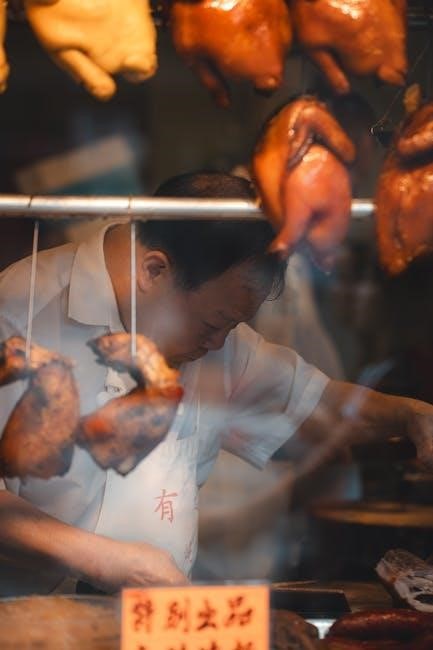
Language Aspects Related to “Chinese” Culture
The linguistic aspects within Chinese culture are fundamental to its identity. This section explores the diverse languages and their unique characteristics, shaping communication and cultural expression. Understanding these elements is crucial for appreciating its rich heritage.
Mandarin Chinese: The Spoken Language

Mandarin Chinese, often simply referred to as Mandarin, stands as the most widely spoken language globally, with native speakers concentrated predominantly in mainland China, Taiwan, and Singapore. Its official status as the national language of the People’s Republic of China, known as (Pǔtōnghuà), highlights its paramount importance in communication, education, and government. The term “Mandarin” itself originates from the Portuguese word “mandarim,” referring to imperial officials whose dialect became the standard. Unlike other languages bearing their country’s name, the English term for evolved quite distinctly. Learning Mandarin involves mastering its unique tonal system, where the same syllable can have significantly different meanings based on its pitch. Online Mandarin Chinese courses, like those from experienced professional training organizations, offer structured programs for beginners. These comprehensive courses often align with recognized proficiency tests and emphasize both spoken fluency and character writing. Even simple tools like a ballpoint pen and squared paper are sufficient to begin writing Chinese characters. This holistic approach is essential to truly grasp this pivotal spoken language. Accessible online resources make learning Mandarin easier for individuals worldwide.
Simplified vs. Traditional Chinese Characters
The terms “Chinese (traditional)” and “Chinese (simplified)” refer to distinct writing systems of the Chinese language. The fundamental difference between them lies primarily in the degree of character simplification and their respective usage contexts. Simplified Chinese characters were introduced in mainland China in the 1950s by the government with the aim of promoting literacy and making writing easier to learn. This system significantly reduced the number of strokes in many characters, streamlining their appearance. It is predominantly used in mainland China, Singapore, and Malaysia, serving as the standard for printed materials and digital communication in these regions.

Conversely, Traditional Chinese characters retain the older, more complex forms that have been in use for centuries. They are characterized by a higher number of strokes and a more intricate structure compared to their simplified counterparts. These characters are still widely used in Taiwan, Hong Kong, and Macau, as well as by many overseas Chinese communities; While the written forms differ considerably, both systems ultimately represent the same spoken language, Mandarin Chinese, and often share similar grammatical structures. For learners, choosing which system to focus on often depends on their specific goals or regional interests, as each offers unique cultural and historical insights.

Educational Impact and Further Learning
“Chinese Cinderella” serves as a powerful educational tool, inspiring interest in Chinese culture and history. It can motivate readers to explore further learning, including online Mandarin Chinese courses. These platforms offer structured programs for beginners, such as MOOCs, to master the language and its writing systems.
“Chinese Cinderella” as a Gateway to Chinese Studies
“Chinese Cinderella” serves as a profound entry point for individuals embarking on Chinese studies, transcending a mere personal narrative to offer a vivid window into a complex civilization. Adeline Yen Mah’s autobiographical account immerses readers in the intricate tapestry of 20th-century China, revealing not only the personal struggles of a young girl but also the broader societal transformations, cultural norms, and historical upheavals of the Republican era. This exposure often ignites a genuine curiosity about Chinese traditions, philosophy, and the intricacies of its social fabric. The book’s compelling storytelling makes abstract historical periods tangible and relatable, fostering a desire for deeper understanding. Many readers, inspired by the narrative, are prompted to explore formal Chinese studies, seeking to learn Mandarin Chinese or delve into its rich history and literature. Online platforms like those offering MOOCs and comprehensive Mandarin courses, similar to Learn-chinese.online with its extensive experience in teaching Chinese, become appealing next steps. These resources provide structured learning paths, enabling enthusiasts to master the spoken language and its unique writing systems, moving from an emotional connection to a scholarly engagement with Chinese culture.
Online Resources for Learning Mandarin Chinese
For those inspired to delve into the Chinese language, a wealth of online resources makes learning Mandarin Chinese more accessible than ever. Numerous online Mandarin Chinese courses, including comprehensive MOOCs, are readily available, catering to various learning styles and proficiency levels. These programs are often structured systematically, guiding learners from foundational concepts, such as basic pronunciation and tones, to advanced grammatical structures and cultural nuances. A key aspect of many courses frequently involves mastering Chinese character writing, where even simple tools like a ballpoint pen and squared paper prove effective for initial practice and memorization. Platforms such as Learn-chinese.online exemplify this, operating as a professional training organization with over 12 years of experience in online Chinese instruction. They offer complete online courses specifically designed for beginners, aligning with recognized Mandarin Chinese proficiency test programs. These robust resources provide structured pathways, enabling students to learn both spoken Mandarin and the intricacies of its written characters, whether simplified or traditional, fostering a holistic linguistic and cultural understanding for immersion. The convenience and comprehensive nature of these digital platforms empower aspiring learners globally.